History tour
$640 EUR / Per person
01
Day 1
Meet and pick up from Sofia airport. We will head out to Sofia’s most famous landmarks. We will start from the Western gate of Serdica dated back to V c. which once connected the Eastern and Western gates of the ancient city. We will pass by the Church of Saint George – Late Antique red brick rotunda, Prince Alexander of Battenberg Square (named after the first prince of modern Bulgaria), Slaveykov square, and Alexander Nevsky Cathedral. Then we will have a light walk through Boris Garden.
Free time.
Overnight in Sofia.
02
Day 2
Breakfast.
After breakfast, we will go to a city that is extremely important for Bulgaria - Koprivshtitsa, also known as "The cradle of Liberation". The city enjoyed privileges before the Sultanate, and today it is a cultural and craft center. The sites which we will visit are Stone bridge of the First Rifle (Kalacchev bridge), marking the beginning of the April Uprising - an extremely important event for Bulgarian history. Another important site is the Memorial complex "The man who gave the fatal sign" - symbolizes the meaning of the "Flying Squad", on 5 stones, in turn, symbolizing the 5 centuries under Ottoman slavery. Free time for lunch.
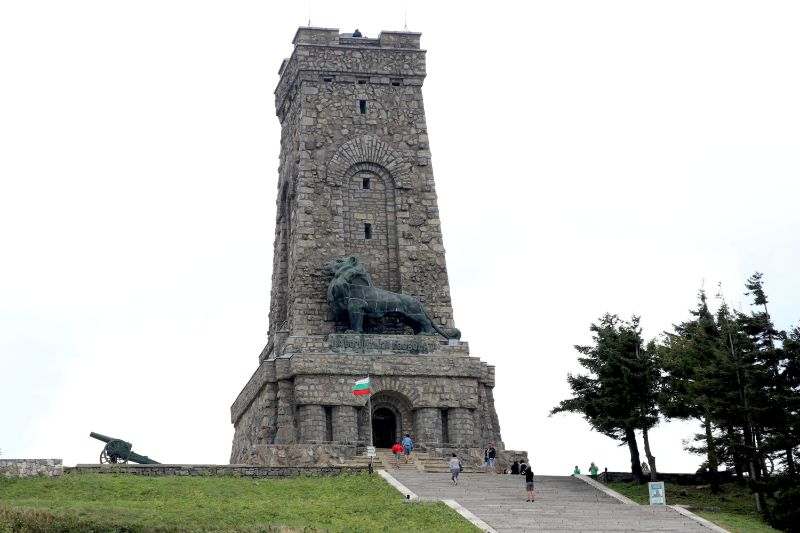
Then we head to the monument that symbolizes heroism and self-sacrificing efforts for the liberation of Bulgaria from Ottoman slavery – Shipka Monument. A large bronze lion – a symbol of the Bulgarian state – guards the entrance. You will have the opportunity to feel the energy of this place steeped in history. Every year on the 3rd of March there are processions on the occasion of the liberation of Bulgaria.
Our next stop is Etara - architectural and ethnographic museum. It is a place that preserves the spirit of a bygone era. Or more precisely, the life of the renaissance Bulgarians. The Etar Village preserves collection of old-times water-driven machinery as laundry mills, flour mills, a fulling mill, a grinding wheel, etc. All object are in action.
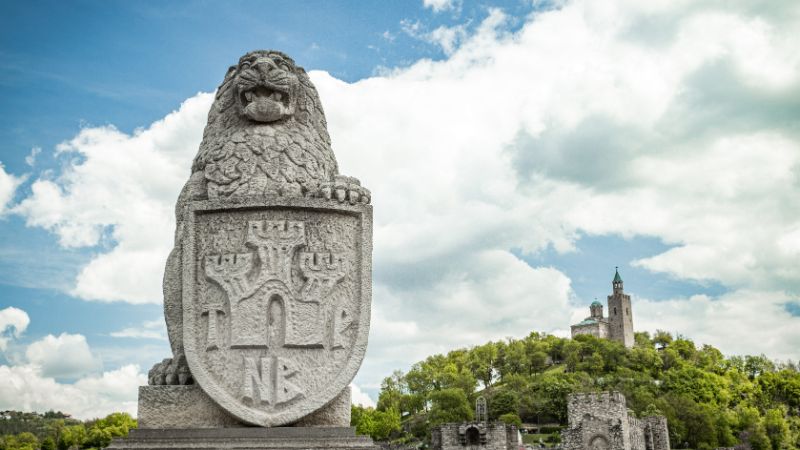
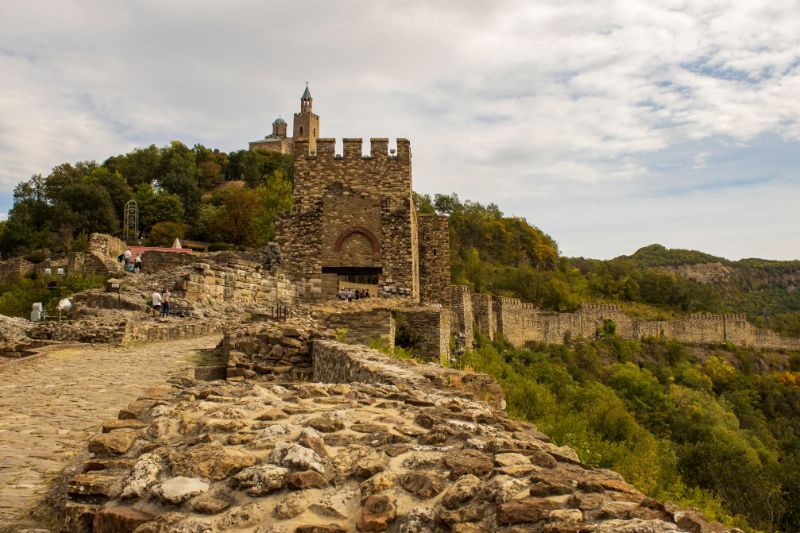
Out last stop for the day is Veliko Tarnovo city where you will free time for dinner and an opportunity to see Tsarevets fortress beautifully illuminated in the evening.
Overnight in Veliko Tarnovo.
03
Day 3
Breakfast.
We will have full day city tour of Veliko Tarnovo - the capital of the Second Bulgarian State during the Middle Ages. It is located on three hills - Tsarevets, Trapezitsa and Sveta Gora and is one of the most beautiful cities in the country. The Patriarchate is Tsarevets' most emblematic place. It was guided by the spiritual life of the state and impresses with its icon paintings recreating the rise and fall of the Second Bulgarian Kingdom. Beneath it are excavations showing the foundations of 470 residential buildings, an inn, aristocracy residences, temples and city monasteries from the royal palace. In the Tsarevets complex we will also see the Baldwin Tower, which bears the name of the Latin emperor Baldwin of Flanders, who was captured in the battle of Edirne in 1205 by King Kaloyan.
Another interesting and beautiful place is the Samovod Bazaar, which is a symbol of the craft-commercial character of the old city. We will walk along the street to the church of St. Nikola, from which there is a view of the entire city. Free time for lunch at the Samovod Bazaar.
We will visit the most famous medieval Bulgarian monument in Veliko Tarnovo - Church of St. Forty Martyrs'. Built and frescoed by the Bulgarian ruler Ivan Asen II in honor of the great victory of the Bulgarians at Klokotnitsa over the troops of the Epirus despot Cyrus Theodore Comnenus on March 22, 1230. It is in this church that three of the most famous columns related to the Bulgarian historical past are preserved – The Aseneva, the Omurtagova and the one from the Rodosto fortress.
The Asenevtsi monument is dedicated to the kings Asen, Peter, Kaloyan and Ivan Asen II. It was built in 1985, on the 800th anniversary of the uprising of the brothers Asen and Peter. The composition is very beautiful and consists of four majestic horsemen, each looking in a different direction, and in the middle - a huge sword (spear). It symbolizes the power and rise of medieval Bulgaria.
Free time for dinner.
If you are lucky, you will attend the Sound and Light Festival.
Overnight in Veliko Tarnovo.
04
Day 4
Breakfast.
After breakfast, we will head to the pink valley - Kazanlak. The city has existed since ancient times and apart from being famous for rose production, Kazanlak also attracts tourists because of the Thracian tomb, created by the Thracian ruler Roigos. It was discovered by chance by a group of soldiers while digging a trench under a mound on April 19, 1944 in the northeastern part of the city. It is one of the best-preserved tombs. The ancient wall paintings are richly decorated and occupy an area of about 40 square meters, four main colors are used - black, yellow, red and white, decorative and figurative painting is depicted, a technique is used in which the plaster has acquired a sheen, the decoration is magnificent with marble slabs and original architectural details, the scenes mostly depict military, mythical scenes and horses.
The mineral springs with their healing properties have attracted various civilizations over the centuries who have settled in Hisarya city (second stop for the day), including the Thracians. The first data are from about 3-4 centuries BC. The mineral springs attracted the Roman emperor Diocletian who had kidney problems and it was the mineral springs that helped him. In 293, the emperor founded the city and named it Diocletianopol after himself. He ordered the construction of an impressive fortress wall around the entire city, the remains of which can still be seen today. The walls were about 11 meters high, reaching up to 13 meters in places, there were 4 majestic gates and as many as 44 towers. We will also see the southern gate "The Camels", which is undoubtedly a symbol of the city. And the park "Monkey Dere" is so named because of an overturned caravan from which monkeys escaped. The conditions in the park were very favorable for them and their population increased a lot. Unfortunately, one bitter winter, the monkeys died of cold. The colonnade - a fountain fed by a mineral spring, the Mother of God's Tear. Above the vault above the fountain are depicted the 8 ancient deities of health – Yazo, Panacea, Telesphorus, Asclepius, Hygia, Epione, Mochaios and Podalerios, as well as the main mineral water crystals. Free time for lunch in the heart of the city center.
Then we head to Starosel, where we will visit the “Thracian cult complex”. The complex is an archaeological sensation of world fame. In 2000, Georgi Kitov came across the main temple (from the 5th century BC), which is located in Chetinova mound. In 2002, the world saw the only heroin tomb with a colonnade, located in the Horizon mound. We are about to get to know the oldest city in Europe – Plovdiv.
The interesting does not end here, on the contrary. We are about to get to know the oldest city in Europe - Plovdiv.
Overnight in Plovdiv.
05
Day 5
Breakfast.
First we will go to “The Episcopal Basilica of Filipopol” - ancient predecessor of today's Plovdiv, is the largest early Christian church in the country. A coin of Emperor Licinius (308-324) discovered during the excavations gives grounds for the hypothesis that the basilica was among the first to be built in the Roman Empire after the legalization of Christianity in 313. Its history spans at least 12 centuries. The basilica was the heart of Christian life in the city between the 4th and 6th centuries before it was destroyed and abandoned, probably as a result of a strong earthquake.
Then we will walk the the main pedestrian area in the center of the city of Plovdiv, which is called “Glavnata”. The main street has a total length of 1.8 km, making it the longest pedestrian street in Europe. We will continue with Ancient Roman Stadium, which was built at the beginning of the 2nd century under Emperor Hadrian. Its length is 240m, and its northern end has been exposed so far, and the rest is located under the main Street of Plovdiv. In the past, gladiator fights, sports competitions and the famous Alexandrian, Kendresian and Pythian games were held here.
Free time for lunch in Plovdiv.
We will tour the Old Town, which offers a cocktail of unbelievable stories, heroic legends and breath taking architecture from different historical periods. It is an authentic open-air museum preserving exhibits from Thracian, Slavic, Roman, Turkish and Bulgarian times – all located at a walking distance from each other.
Next stop is Hindliyan House. Stepan Hindliyan’s house was constructed in 1834-35 by unknown builders and represents one of the few houses in Plovdiv, which have preserved their original symmetric design. Present day people, the contemporaries of the third millennium, cannot but feel awe at the ingenious and highly sophisticated design of the items, used by people during the 19th century, excellent examples of which can be found in Hindliyan House. Moreover, many of the cultural events of the city take place in this house.
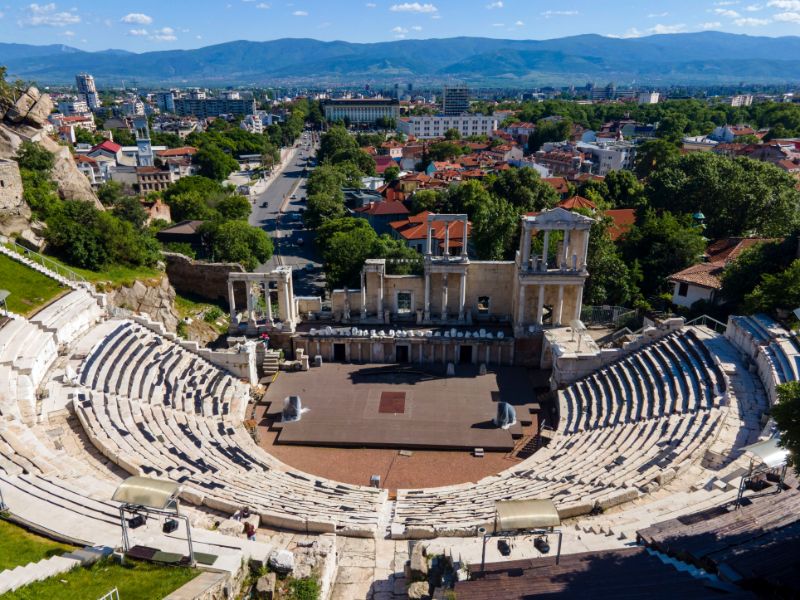
Another landmark not to be missed is The Ancient theatre of Philippopolis. It is one of the best-preserved ancient theatres in the World. It is located on the Southern slope of the Three Hills, in the saddle between Taksim and Dzhambaz tepe. Presumably, some of the fights with animals were held in the theatre, as remains of safety facilities in front of the first row are uncovered. Now this object is fully adapted for the modern cultural life of Plovdiv and it hosts various performances for about 3,500 spectators.
Free time in Plovdiv. Overnight.
06
Day 6
Breakfast.
We will go to one of the most picturesque cities in Bulgaria - Bansko.
Arriving in Bansko – one of the largest mountain resorts located in the Southwest Bulgaria with its 75 km snowboard pists. Undoubtedly, Bansko is the most known as a skiing and snowboarding destination, but there are also historical sites important for Bulgarian history. We will visit the house-museum of one of the most important Bulgarian educators and founder of the secular education in Bulgaria - Neofit Rilski. The building is also known as Benin’s House because the secular name of Neofit Rilski - Nikola Poppetrov Benin. The Museum offers insights into the lives of the people from the Bulgarian Renaissance as well as a typical representative of the Bansko’s fortified houses. Neofit devoted his whole life to science, culture and education, and became the author of the first Bulgarian grammar-book. Later he painted in the famous “Rila Monastery” where he first became a monk and then hegumen. Near the church is a clock tower with a bell, which is 30 meters high. As in other historical places in the country, here at one time the locals buried a cross in the ground, with which they tricked the Turks into believing that there was already a church on the site, and thus the Ottomans agreed to build the temple.
We will have lunch in the heart of Bansko.
Then we go to Rila Monastery - also called the “Treasury of Bulgaria”. It's located in the Rila mountains where the Drushlyavitsa and Rilska rivers join. It was founded in the first half of the 10th century by St. Ivan Rilski - spiritual protector of the Bulgarian nation. The monastery is a pillar and a storehouse of the Bulgarian spirit and the national identity. Rila Monastery is the most important spiritual and literary center of the Bulgarian national revival, with an uninterrupted history from the Middle Ages until present times.
Arriving at Sofia and overnight.
07
Day 7
Breakfast. Transfer to the airport.
PRICES
| 2PAX | 1708 EUR pp |
| 4PAX | 1130 EUR pp |
| 6PAX | 940EUR pp |
| 8PAX | 860 EUR pp |
| 10PAX | 790 EUR pp |
| 20PAX | 680 EUR pp |
| 30 PAX | 640 EUR pp |
*Please note that the prices can vary depending on the period of time that you choose to travel. Feel free to contact us in order to get an offer.
Included in the tour price:
- Welcome, pick-up, and drop-off at Sofia airport;
- All ground transportation for the whole tour;
- English-speaking guide for the whole tour;
- 1-2 night in Sofia in 3* hotel with breakfast;
- 1 night in Blagoevgrad in a 3* hotel with breakfast;
- 1 night in Melnik in a traditional guest house with included breakfast, lunch, and dinner;
- 1 night in Bansko in 3* hotel with included breakfast and dinner;
- 1 night in Plovdiv in a guest house, located in the Old Town with included breakfast and dinner;
- 1 night around Belintash in a traditional guest house with included breakfast and dinner;
- Entrance fees to the basic sites;
- 1 FOC for every 20 paying Pax / 2 FOC for every 30 paying Pax in a double room;
Excluded from the tour price:
- Tips;
- Other meals;
- Personal expenses;
- Beverages;